Showing posts with label old sewing machine. Show all posts

Friday, December 2, 2016

A Closer Look: Singer 404

There is often a list of sewing machines that vintage sewing machine collectors love and you'll hear all about the 301 or the 500. The Singer 404 is often one of those machines but is also sometimes overlooked for the ones that can do more. The 404 is a straight stitch only machine but it is in the class of slant needles machines with other ones like the 401, 500, and 503. It is truly a great machine in it's own right. It may seem at first glance to be so very basic because all it does is that straight stitch. There are no cams or zig zag features. It does a perfect straight stitch.
You might be asking what sort of person uses just a straight stitch. The answer is quite a few people. If you are a quilter it's pretty rare to ever use anything but that straight stitch. Sewing clothes again many items can be made with just a straight stitch and there are different seam techniques that don't rely on a zig zag. They made slant needle buttonhole attachments and they are relatively easy to find.

This 404 was made in 1959. It features a two tone color scheme. It uses class 66 bobbins. You can raise the needle plate.


Thursday, November 24, 2016

A Closer Look at the Singer 215G

Yesterday, I posted about the sewing machine that a friend gave me. if you haven't read about that story check it out here. I thought today we might look closer at the Singer 215G.
The Singer 215, 216 and 218 G models were made in Germany in the 1950's. After World War II Singer had taken over what was once Haid und Neu in Karlsruhe, Germany. Singer operated there from 1954 until 1982. These were some of the first machines they produced under the Singer name. I've seen pics of very early 215 models with treadle bases.
Mine is electric and has it's original motor. What I like about this machine is it's almost industrial style. The light is rather cool being sort of out there at the front and it can be adjusted around a bit. It is a straight stitch only machine but you can drop the feed dogs. Mine is in a two tone brown color scheme of mocha and chocolate brown but I believe it, also, came in black or beige.
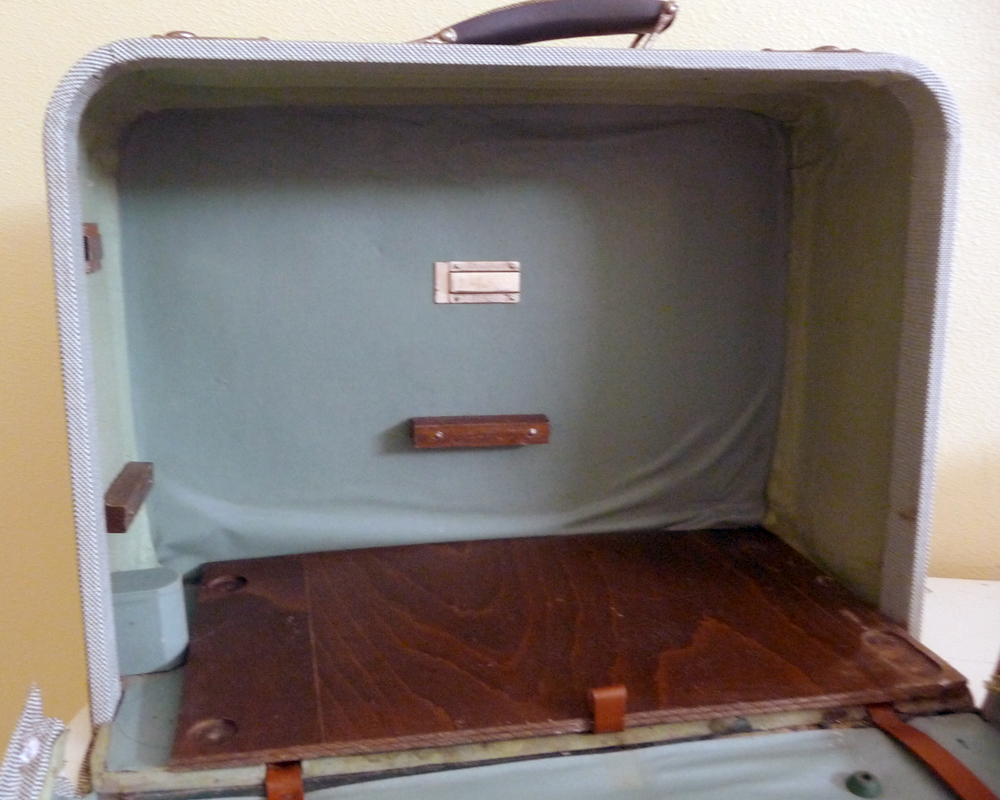
Mine was in it's original suitcase style case. It has a heavy wooden base that had these little slots which I soon realized allowed the accessories box to attach to the machine to extend the bed. The wooden box was just a basic box with no dividers so I asked my dad if you could make dividers and a lift out tray. I hate it when things just sort of rattle around.
This machine is heavy. It would not the first one I would ever choose to take to a sewing class. All in all it's a good machine. Fantastic heavy feel to it with nice industrial styling to it. I haven't really tested it with bulky and thick fabrics yet but it seems like it could be a real workhorse.


Wednesday, November 23, 2016

That time I went grocery shopping


Picture it an average weekend day. I had just been telling my mom that I wish I could luck into a free vintage sewing machine something that would need a bit of work. I belong to a vintage sewing machine group online and people often post about their free finds. To be honest I had a few pass through my hands a few years ago but I hadn't been interested in learning about actual repair until recently. I let those go because having a basket case machine overwhelmed me at the time. Anyway, I was going about my errands when I ran into a friend at Safeway.
We were chatting and the subject of vintage sewing machines came up and she says "I have an old singer that I got at an estate sale but it's too much work for me do you want it? I have it in the car!" The answer to that is of course yes and lets go get it. Luckily the grocery store provided carts because I needed a cart to haul what I lovingly called the "boat anchor" to my car.
It was in a grubby suitcase style case. The first time I had seen this type of case. I open the case up to find a frozen, dirty Singer 215-G. The 215-G was made in Germany in the 1950's. This one came in what was once a snappy looking suitcase style case. It came with a wooden accessories box filled with a light bulb, a dirty pincushion with rusty pins, bobbins with vintage thread, some wooden spools of thread, several sewing machine feet, and a seam guide.
I spent several hours working on getting the old oil off the moving metal parts since old sewing machine oil is like shellac. I added new sewing machine oil and then plugged the machine in. I hadn't plugged it in at all. I like to move vintage machines by hand at first until I know they are suitably workable. Plugging in the machine there is always that moment where the question is will the motor work or not. As luck would have it the motor purred.
I've done some general cleaning on the machine but nothing really detailed as of yet and I have done some sewing with it. It's a great machine. The bobbin winder is still frozen though.

Wednesday, October 26, 2016

Lavender Project: Kenmore Model 51 Part 2

How about a little update today?
A couple weeks ago I picked up this lavender and cream Kenmore sewing machine at Goodwill. You can find all the before pictures here.
It was covered in a good layer of dust about an 1/8 inch thick in some places. It had masking tape stuck to the needle plate and the bed of the machine. It also had a v belt that was so poorly I just cut the thing off the machine. It's now free of dust. I spent a long time getting the masking tape off. Masking tape is the devil's tape when it comes to sewing machines. It tends to harden and become difficult to remove. If you need to tape a seam guide on your machine please use a low tack painters tape and remove it when you don't need it. I took a v belt from another machine to use temporarily while I worked on it. I got the machine cleaned and oiled inside. This motor needed a drop of oil per the instructions on the motor housing. It runs and stitches well. Although there is a squeak which is driving me batty as I try to track it down.


The cabinet was my other hurdle to work on. It wasn't shabby due to water damage. It looked poorly due to sun damage. Some of the finish was gone. I liked the Danish Modern style which sort of dictates a wood finish not painted. I had thought of painting it. if someone else wants to paint it in the future that's on them. I ended up using Howard Restore-A-Finish in mahogany. Some parts of the very top had to be stained because the sun had also caused the original stain to fade. It's not 100% perfect but it looks nice.


During this time I also found a set of B cams for it and an original manual.


Sunday, September 25, 2016

My Top Ten Reasons to Buy a Vintage Sewing Machine


Probably one of those questions that people outright ask or at least think about is: Why would you choose a vintage sewing machine over something that is new that had hundreds of built in stitches?

Here is my top ten reasons for buying vintage
  1.  Most people only use straight stitch and a basic zig-zag stitch so why pay for hundreds of unused stitches
  2.  Metal gears. No plastic parts that can literally shatter. Having a seized up or frozen machine is not a catastrophic event for a metal geared machine.
  3.  Availability of parts. You can find the parts for most vintage machines quite easily. Some machines are more easy to find parts than others but with enough patience you can usually find most parts. Keep in mind most of these machines are 50 years old or older. Modern plastic machines have planned obsolescence so parts on some, only a few years old, can be impossible to find. They want you to buy a new machine not repair.
  4.  No computer. You don't even need to worry about expensive computer parts
  5.  Ease of use. Vintage Singer machines are super simple to use and to thread making them a good choice for a beginner.
  6.  Easy to maintain. Can you follow simple written instructions and drawn out diagrams? If you said yes then you can oil and grease your own vintage sewing machine. Most vintage sewing machine manuals explain how to do this.
  7.  Heavy duty. Yep there are those metal gears again. Vintage machines can sew heavy denim and silk. However, despite some ebay seller claims, these are domestic machines not industrial. Some can stitch light leather on occasion but no domestic machine is going to be able to sew thick leather every day for 8 hours a day.
  8.  They were made to last. These were investment pieces back in the day. People paid quite a bit for their Singer 201 back when it first came out and they expected it to work for many years
  9.  For a price between $50 and a couple hundred you can get a machine that is superior to anything modern in that price range today. 
  10.  They are just awesome and can come with great stories particularly if you purchase them from an original owner.

There are just a few of my reasons for finding vintage machines a wise choice. I'll cover more topics on some of the advantages later on.