There is often a list of sewing machines that vintage sewing machine collectors love and you'll hear all about the 301 or the 500. The Singer 404 is often one of those machines but is also sometimes overlooked for the ones that can do more. The 404 is a straight stitch only machine but it is in the class of slant needles machines with other ones like the 401, 500, and 503. It is truly a great machine in it's own right. It may seem at first glance to be so very basic because all it does is that straight stitch. There are no cams or zig zag features. It does a perfect straight stitch.
You might be asking what sort of person uses just a straight stitch. The answer is quite a few people. If you are a quilter it's pretty rare to ever use anything but that straight stitch. Sewing clothes again many items can be made with just a straight stitch and there are different seam techniques that don't rely on a zig zag. They made slant needle buttonhole attachments and they are relatively easy to find.
This 404 was made in 1959. It features a two tone color scheme. It uses class 66 bobbins. You can raise the needle plate.
The love for vintage mechanical sewing machines is expressed here. Learn about different machines and see before/after of some great finds. I will be showing some of the cool machines I love and own as well as project ones.
Showing posts with label closer look. Show all posts
Friday, December 2, 2016
Thursday, November 24, 2016
A Closer Look at the Singer 215G
Yesterday, I posted about the sewing machine that a friend gave me. if you haven't read about that story check it out here. I thought today we might look closer at the Singer 215G.
The Singer 215, 216 and 218 G models were made in Germany in the 1950's. After World War II Singer had taken over what was once Haid und Neu in Karlsruhe, Germany. Singer operated there from 1954 until 1982. These were some of the first machines they produced under the Singer name. I've seen pics of very early 215 models with treadle bases.
Mine is electric and has it's original motor. What I like about this machine is it's almost industrial style. The light is rather cool being sort of out there at the front and it can be adjusted around a bit. It is a straight stitch only machine but you can drop the feed dogs. Mine is in a two tone brown color scheme of mocha and chocolate brown but I believe it, also, came in black or beige.
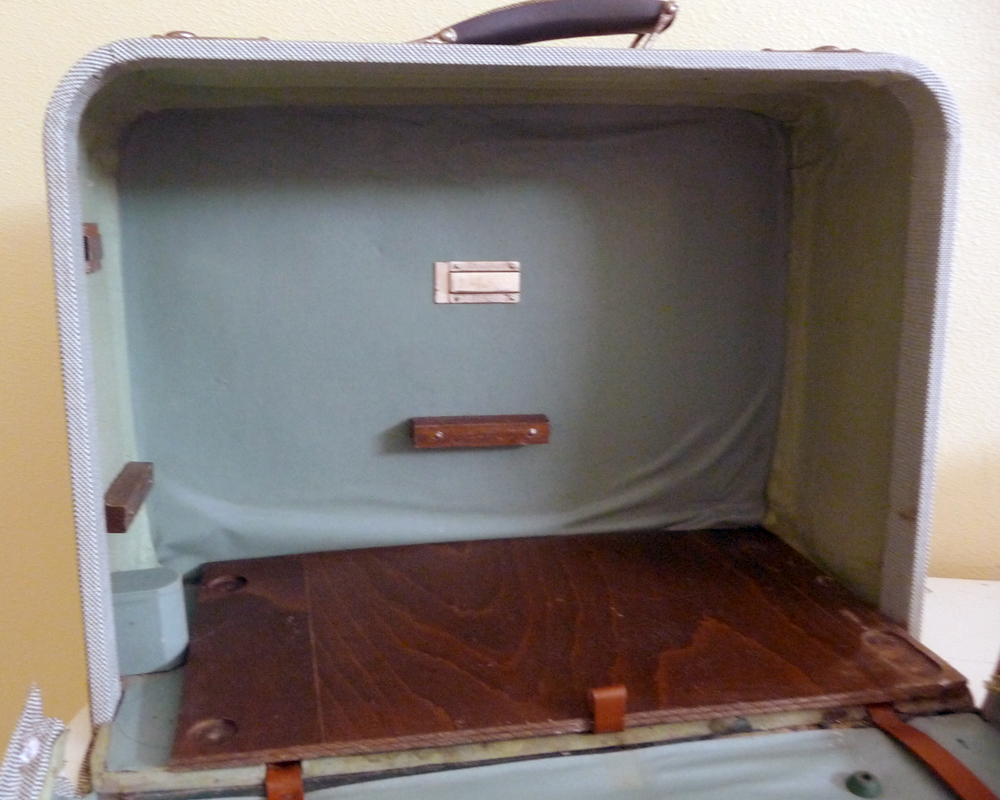
Mine was in it's original suitcase style case. It has a heavy wooden base that had these little slots which I soon realized allowed the accessories box to attach to the machine to extend the bed. The wooden box was just a basic box with no dividers so I asked my dad if you could make dividers and a lift out tray. I hate it when things just sort of rattle around.
This machine is heavy. It would not the first one I would ever choose to take to a sewing class. All in all it's a good machine. Fantastic heavy feel to it with nice industrial styling to it. I haven't really tested it with bulky and thick fabrics yet but it seems like it could be a real workhorse.
The Singer 215, 216 and 218 G models were made in Germany in the 1950's. After World War II Singer had taken over what was once Haid und Neu in Karlsruhe, Germany. Singer operated there from 1954 until 1982. These were some of the first machines they produced under the Singer name. I've seen pics of very early 215 models with treadle bases.
Mine is electric and has it's original motor. What I like about this machine is it's almost industrial style. The light is rather cool being sort of out there at the front and it can be adjusted around a bit. It is a straight stitch only machine but you can drop the feed dogs. Mine is in a two tone brown color scheme of mocha and chocolate brown but I believe it, also, came in black or beige.
Mine was in it's original suitcase style case. It has a heavy wooden base that had these little slots which I soon realized allowed the accessories box to attach to the machine to extend the bed. The wooden box was just a basic box with no dividers so I asked my dad if you could make dividers and a lift out tray. I hate it when things just sort of rattle around.
This machine is heavy. It would not the first one I would ever choose to take to a sewing class. All in all it's a good machine. Fantastic heavy feel to it with nice industrial styling to it. I haven't really tested it with bulky and thick fabrics yet but it seems like it could be a real workhorse.
Subscribe to:
Posts (Atom)